CoinGecko has enhanced its cybersecurity assessments for centralized exchanges by migrating to CORE3, improving risk evaluations for users.
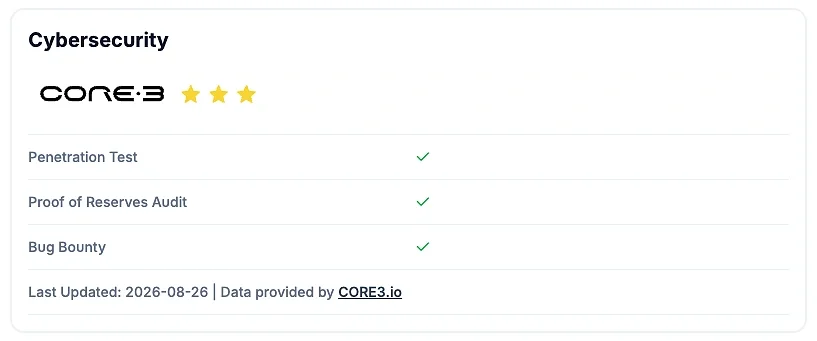
CoinGecko, a leading independent cryptocurrency data platform, has announced a significant upgrade to its cybersecurity score system. The platform has transitioned from CER.live to CORE3, integrating a more advanced risk assessment framework for centralized exchanges.
This migration affects 166 exchanges and introduces a forward-thinking evaluation of potential risks, helping to anticipate issues before they translate into losses. Users can expect minimal changes to individual exchange scores, with adjustments capped at two percentage points, ensuring a smooth transition.
Enhancements in Cybersecurity Trust Score
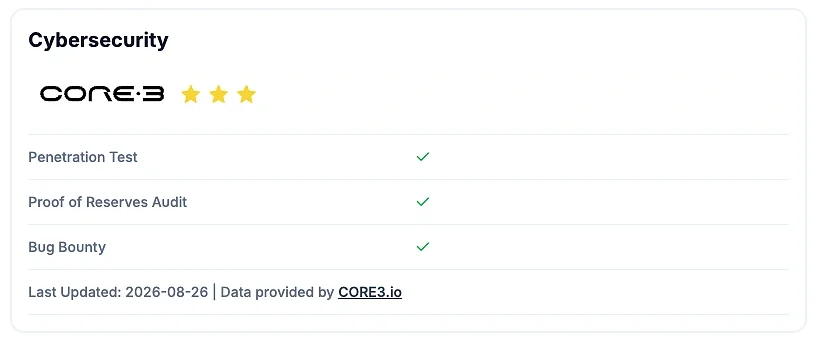
Thorough refinements during the migration have optimized the checks that form the basis of CoinGecko’s cybersecurity ratings. While scores may vary slightly, users will benefit from improved accuracy in future assessments. CORE3 offers a dual-layer approach, allowing users to examine key indicators such as penetration testing records, bug bounty programs, and Proof of Reserves audits alongside the overall cybersecurity rating.
For context, penetration testing is a common method used to evaluate the security of an organization's systems by simulating an attack from malicious outsiders. This kind of proactive analysis is essential, particularly in the cryptocurrency sector where the stakes are high and the threats are numerous. Simultaneously, bug bounty programs have become industry standard, motivating ethical hackers to identify vulnerabilities in exchange platforms before they can be exploited. The addition of Proof of Reserves audits further adds a layer of assurance that exchanges hold assets sufficient to cover customer deposits, thereby boosting user trust.
Implications for Exchanges and Users
This upgrade fosters greater transparency in how exchanges manage counterparty risk, particularly regarding their cybersecurity practices and financial disclosures. Exchanges that have yet to provide reserve data to CORE3 are urged to submit their information, as verified reserves create a strong signal for users assessing potential risks; this verification may allow exchanges to earn CORE3's Solvency seal.
When exchanges are compelled to disclose their reserves, it levels the playing field, allowing users to make informed decisions. For too long, many platforms have operated without sufficient transparency, which could lead to catastrophic financial loss for users in the event of a breach or insolvency. The Solvency seal serves as a valuable guiding light in a murky marketplace where users are often left in the dark about the resiliency of their chosen platforms.
Moreover, the updated cybersecurity Trust Score incorporates operational security components that are pivotal in mitigating losses within the blockchain industry. This new approach signals a maturity in the risk management strategies employed by exchanges. As the cryptocurrency market matures, evaluation metrics like these present vital tools for users. Trust Scores now reflect a combination of historical resilience and proactive measures taken by exchanges—something that could change the way users gauge their relationships with these platforms.
The changes are live, and updated Trust Scores are now available on CoinGecko. Entities looking for insights can explore their risk assessments on core3.io.
The Bigger Picture: Trust and Security in Crypto
If you’re working in this space, you understand the importance of security in cryptocurrency. The events of previous years—such as high-profile hacks and the collapse of significant exchanges—have left lasting scars on the industry and convinced users of the need for greater assurance. Current statistics suggest that the cryptocurrency sector loses billions of dollars annually to cybercrime, making the focus on security not just a luxury but a necessity.
These advancements by CoinGecko represent the industry's evolving response to such challenges. With users demanding accountability and transparency, platforms must recognize the shift in expectations. The use of a more structured cybersecurity assessment requires exchanges to adopt serious methodologies in their operational practices.
This development isn’t just a service enhancement; it’s a potential fork in the road for the industry. Exchanges paying attention to these new standards could differentiate themselves in a crowded marketplace. As they gather public sentiment towards cybersecurity practices, a ripple effect may encourage lagging platforms to up their game and improve security measures along a similar trajectory.
(and this is the part most people overlook)—the real shift may hinge on user behavior. When a sizeable portion of users begins to favor exchanges with higher Trust Scores and verified reserves, the pressure mounts on all platforms to comply. In that scenario, cybersecurity becomes not just about protection but about remaining competitive.
For users, this signals not just a development but a rallying point for safety in digital assets. The evolution of platforms like CoinGecko provides both the tools and the impetus for informed decision-making in a sector often fraught with uncertainty and risk. Investing in assurance and transparency is clearly the only way forward. But will exchanges heed this call? That remains to be seen.



Discussion
Sign in to join the discussion.