Proof of Reserves (PoR) enhances transparency in cryptocurrency exchanges, helping users verify asset safety amid market uncertainty.
As cryptocurrency markets evolve, the demand for transparency in exchanges has never been more critical. This need for credibility is epitomized in the concept of Proof of Reserves (PoR), an increasingly vital mechanism that illuminates whether exchanges have sufficient assets to meet their obligations to users. With data revealing that a staggering 79 out of 166 exchanges have verified reserves, the message is clear: users on many platforms lack essential assurance that their funds are safeguarded against potential crises.
Understanding Proof of Reserves
Proof of Reserves serves as a methodical framework whereby an independent auditor measures an exchange's assets against its customer liabilities. This involves a thorough verification process: auditors check the reported assets and confirm control over pertinent wallets while assessing the liabilities that need coverage. The goal here is clear—to establish a tangible link between what an exchange claims to hold and the actual customer deposits it must honor.
CoinGecko has been at the forefront of incorporating PoR into its Trust Score methodology, which has evolved since its launch in 2019. This score goes beyond basic trading volume, integrating evaluations of liquidity, cybersecurity, and various other performance metrics. The implications of this multifaceted approach cannot be overstated, especially in a market still reeling from the fallout of high-profile exchange collapses.
How PoR Functions
At its core, PoR combines two essential types of evidence: proof of assets and proof of liabilities. When assessing liabilities, the innovative use of Merkle trees is particularly noteworthy. Customer balances are transformed into cryptographic hashes, culminating in a Merkle root that succinctly captures all reported balances at a particular snapshot in time. This enables customers to verify their own balances through a Merkle proof—essentially a cryptographic confirmation that their deposit exists within the broader framework without exposing sensitive individual account information.
On the asset side, auditors verify the exchange's control over its claimed blockchain addresses. This involves providing cryptographic signatures or facilitating transactions that authenticate ownership of the reported funds. Ultimately, this dual verification approach yields a moment-in-time comparison that resonates as a reliable measure for users, but it doesn’t represent a full picture of the exchange’s comprehensive financial health.
Verifying Exchange Reserves
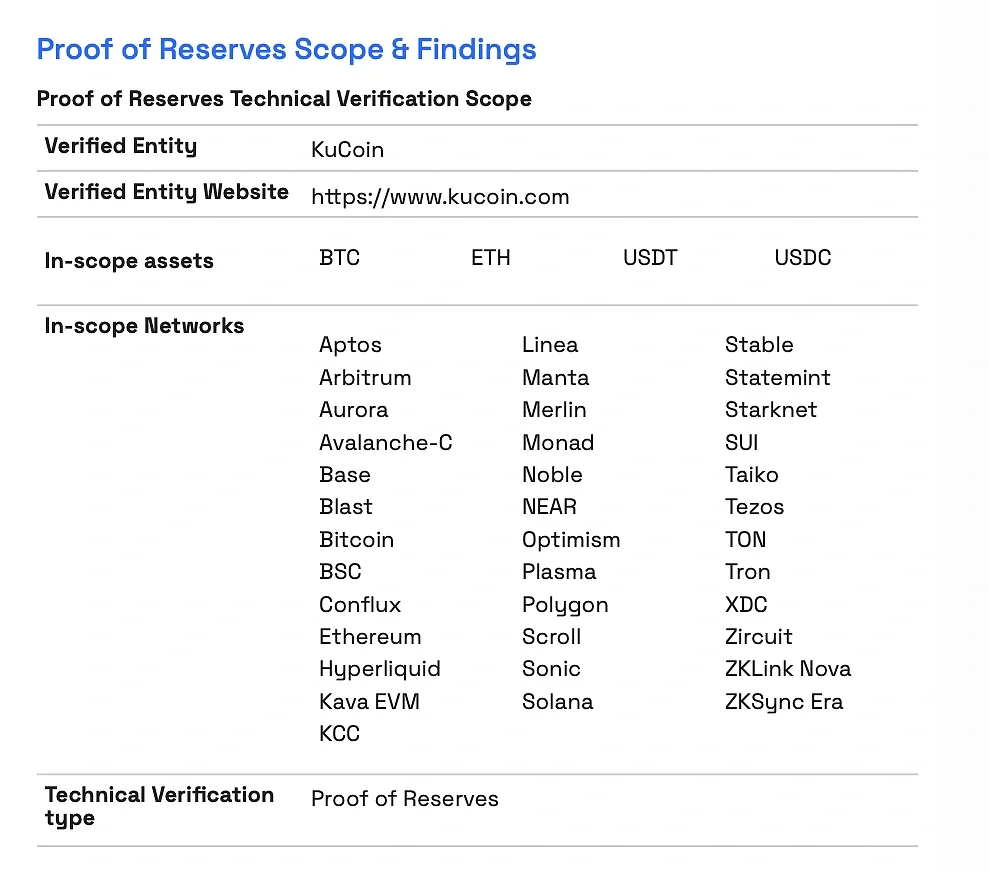
Examining the practices of specific exchanges helps illuminate how PoR can be applied effectively. The August 2026 report from KuCoin provides an essential case study in this realm. It showcases their approach to confirming the assets within their PoR assessment, which included notable cryptocurrencies like Bitcoin, Ethereum, USDT, and USDC across 38 networks, such as Bitcoin, Ethereum, and Solana.
Scope of Assets in PoR
When evaluating PoR reports, it’s crucial to understand the defined scope of each assessment. KuCoin’s approach, for instance, focused on just four notable assets. This limited selection doesn't reflect the entirety of their holdings. A comprehensive PoR would ideally cover a broader array of assets to get a true sense of financial stability.
Confirming Control of Wallets
Equally important is verifying the actual control of the reported wallets. Successful PoR assessments must ensure that the wallets being audited are indeed under the exchange's authority. The methodology can include various approaches, such as executing small transactions from these addresses and confirming their origin on the respective blockchains. A robust confirmation process bolsters user trust significantly.
Assessing Customer Liabilities
A key component that directly influences the assessment's effectiveness is clarity around which liabilities are included. Some exchanges may limit their assessments to spot balances, while others account for margin positions and lending balances. The liability landscape is critical—an exchange that only reports wallet balances without a clear connection to customer liabilities restricts the user's ability to assess potential risks accurately.
Evaluating Reserve Coverage
Reserve coverage can typically be approached through two models: 1:1 backing of reserves or an overall coverage of liabilities. The former demands that each asset held by customers be matched by a corresponding amount in the exchange’s reserves. This method is more stringent and is favored from a regulatory and risk management perspective, ensuring that each user’s deposit is directly secured.
The latter model, which involves assessing total reserves against overall customer liabilities, is more frequently employed. This strategy enables the exchange to leverage liquid assets across the platform to satisfy a diverse portfolio of liabilities. However, caution is warranted. Exchanges that rely heavily on their native tokens as reserve assets run substantial risks. The collapse of FTX, which saw its solvency tied to the volatile value of its FTT token, serves as a stark reminder of this precarious approach.
What to Watch For
If you’re navigating this complex ecosystem, understanding the distinction between reserve backing models is paramount. The quality and liquidity of the reserve assets play an equally critical role. Major, well-established cryptocurrencies like Bitcoin and Ethereum generally provide a more reliable coverage framework compared to those with lower liquidity or higher volatility. Investors and users must keep a vigilant eye on not only the percentages of reported coverage but also the methods and asset types backing these claims.
The elevated discourse around Proof of Reserves illustrates a burgeoning demand for transparency in the crypto trading space. The industry is under scrutiny like never before, and it’s imperative that exchanges embrace PoR as a standard practice. The most substantive takeaway for users is clear: doing diligent research into these reports can empower them to make informed decisions and assess the safety of their investments more effectively.



Discussion
Sign in to join the discussion.