Korean stock-linked perpetual futures have surged to KRW 307 trillion, highlighting the significant shift towards offshore trading and its implications.
Korean Stock Trading's Sudden Shift Offshore
In a striking evolution, Korean stock-linked perpetual futures have surged to an astonishing KRW 307 trillion in trading volume in just a matter of months. This trend is heavily influenced by crypto exchanges expanding their offerings into traditional assets, which has increasingly drawn both domestic and global investors into this burgeoning offshore market.
Research from Tiger Research emphasizes that the influx into offshore perpetual futures is not simply a seasonal trend but rather a significant shift in trading dynamics, motivated by factors including the increasing accessibility and leverage of these products.
The Growth of Perpetual Futures in Traditional Markets
Crypto exchanges are no longer confined to digital assets like Bitcoin and Ethereum. They're now venturing into traditional markets by offering products linked to various asset classes, including stocks and commodities. This pivot has been facilitated by perpetual futures, a type of derivative that allows investors to engage with price movements without having to own the underlying assets.
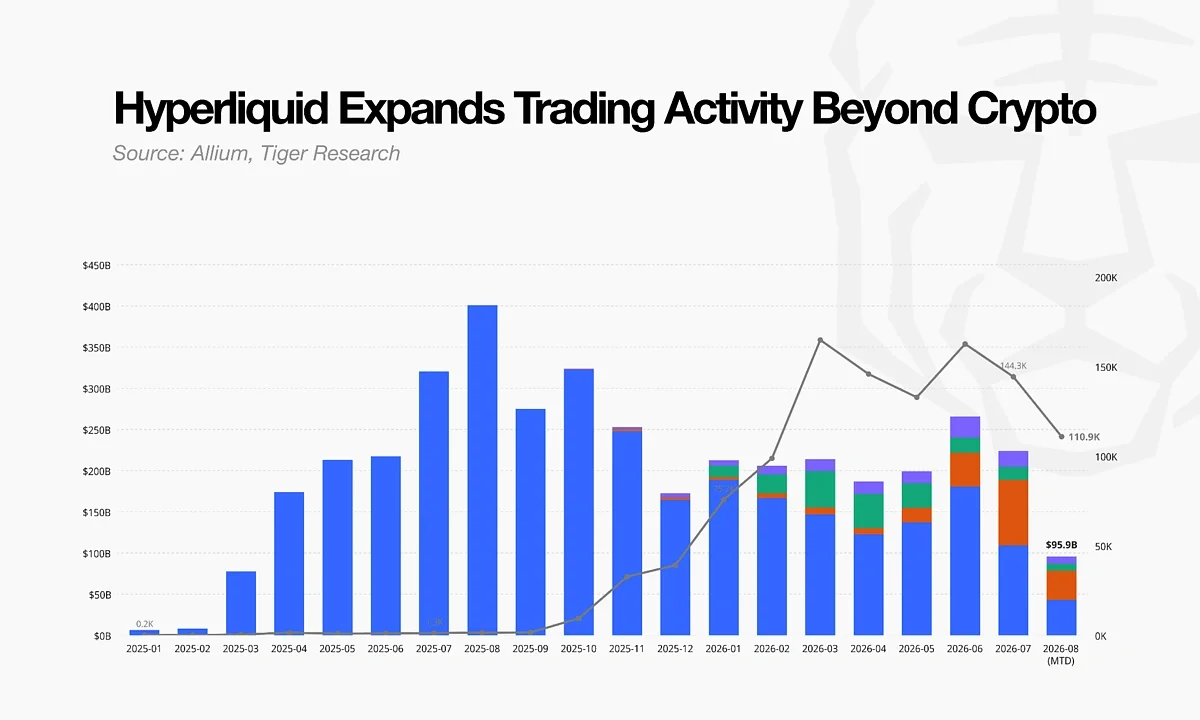
These derivative instruments have no expiration dates and can be traded around the clock, thereby increasing the opportunities for investors. This new infrastructure not only opens doors for traditional asset trading but also positions crypto exchanges at the forefront of a rapidly evolving market landscape.
Korean Stocks Attracting Global Attention
Korea is at the forefront of this offshore trading phenomenon, with its major stocks like Samsung Electronics and SK Hynix being actively pursued through perpetual futures. These products are particularly attractive to both local and global investors, as they can be traded even when Korea's domestic markets are closed, providing greater flexibility and higher leverage.
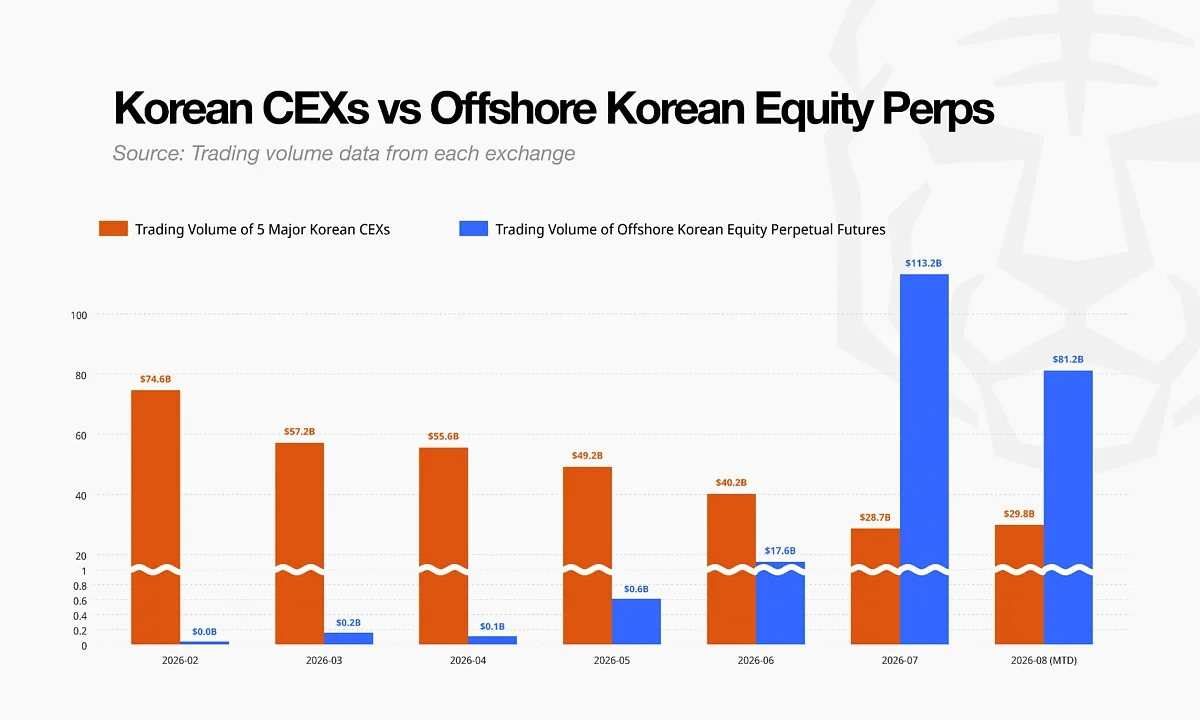
From February to August 2026, perpetual futures tied to Korean stocks amassed an estimated trading volume of KRW 307 trillion, with KRW 166 trillion occurring in August alone. For comparison, the five largest crypto exchanges in Korea saw a mere KRW 42 trillion over the same timeframe, indicating a dramatic shift in trading patterns.
The Dynamics of Price Discovery in Offshore Markets
The growth of derivatives such as perpetual futures has outpaced even some of the traditional exchange-traded funds (ETFs). For instance, trading in perpetual futures linked to the KORU ETF, which represents Korean equities, reached USD 24.1 billion, surpassing the USD 8.9 billion in trading volume of the ETF itself in August 2026. This isn't just a coincidence; it hints at a larger role that derivatives may play in price discovery.
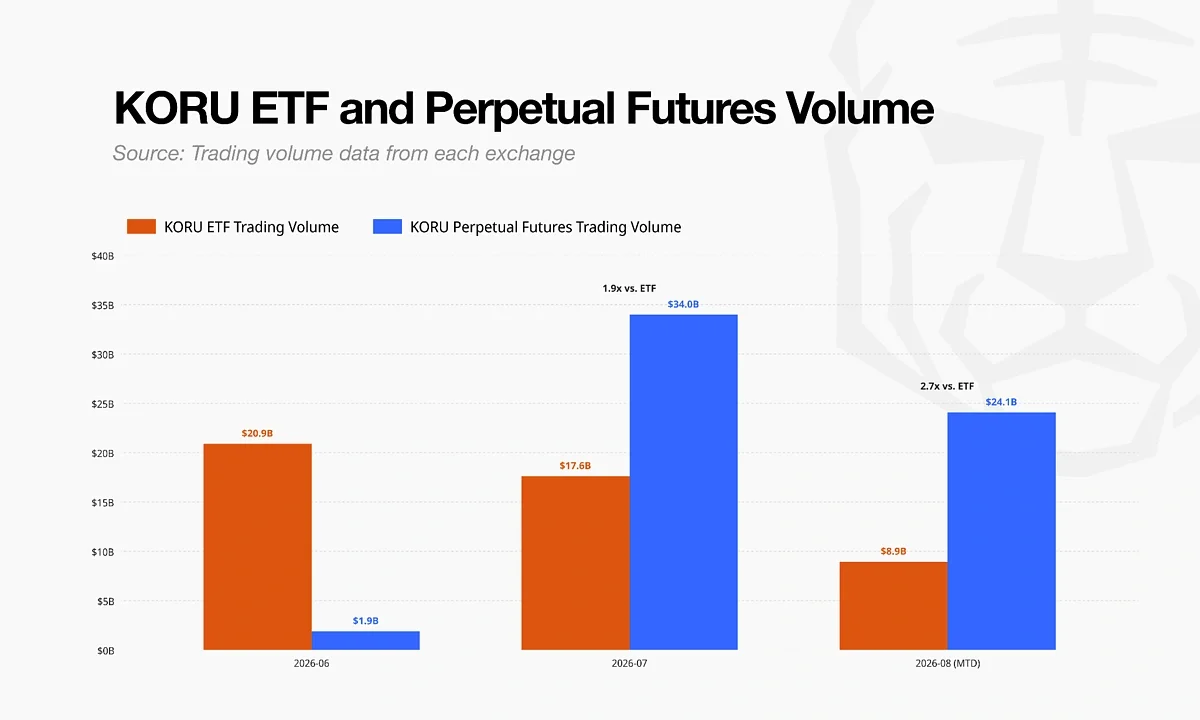
Offshore derivatives markets could potentially influence spot market prices, as market makers hedge their positions by trading related assets. Such dynamics create a scenario where derivatives may drive the price movements of the underlying assets, creating a feedback loop that warrants careful observation.
Broader Implications of Offshore Liquidity
Korean traders are not alone in participating in this trend; offshore perpetual futures tied to Korean stocks are becoming increasingly popular in regions such as Japan and China. Remarkably, perpetual futures are even being created for private companies, thus broadening the potential for investments that were previously inaccessible through traditional markets.
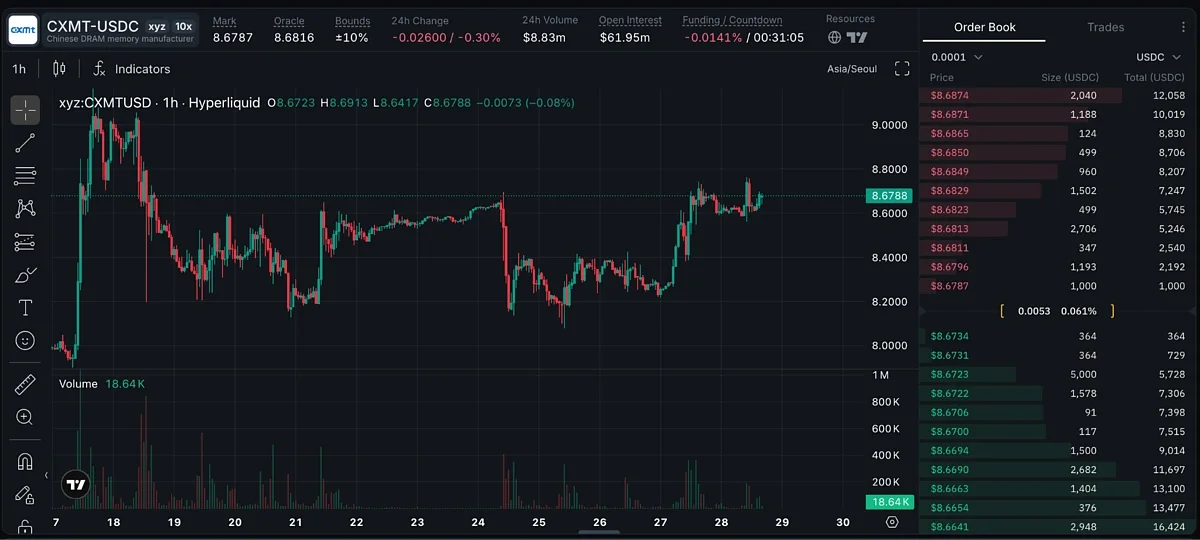
This rapid expansion highlights a pivotal transformation in liquidity dynamics, as the boundaries that once delineated different asset classes loosen. Even the participants in this market are evolving; the influx of professional traders indicates a shift from purely crypto-focused investing to broader asset diversification.
Navigating Challenges in Korea's Financial Landscape
The Korean financial industry faces a significant challenge as it observes the rise of offshore trading. Regulation appears to limit local participants more than it stifles offshore growth. For instance, while some exchanges implement restrictions for Korean residents, the overall offshore market offers ample opportunities for international investors.
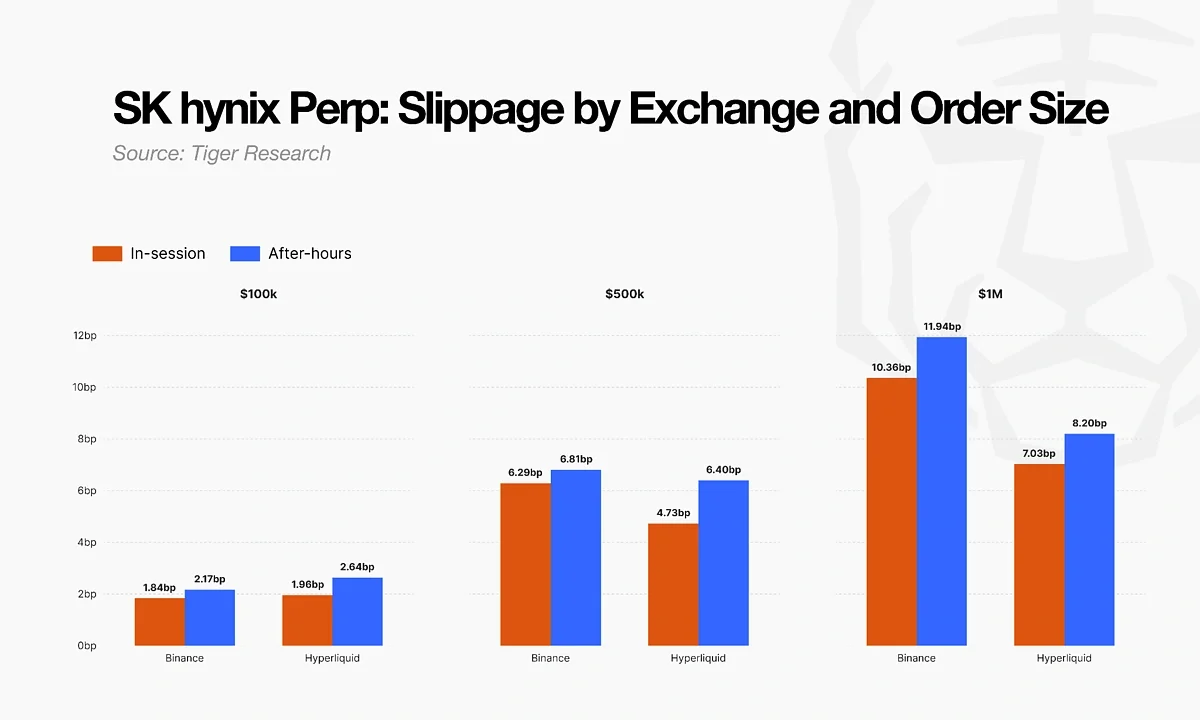
Korea's financial institutions must not only address this trend by seeking to contain it but should also consider how to capitalize on the expanding opportunities presented by these evolving markets. By leveraging its existing crypto exchange infrastructure, Korea could explore avenues to create a framework that supports the growth of perpetual futures and other derivatives.
Building Infrastructure for the Future
To tap into this offshore liquidity effectively, Korea needs to focus on developing comprehensive regulatory frameworks that encompass derivatives, corporate access, and mechanisms like KRW stablecoin infrastructure. This would facilitate smoother capital flows and bolster the participation of both local and foreign institutional investors.
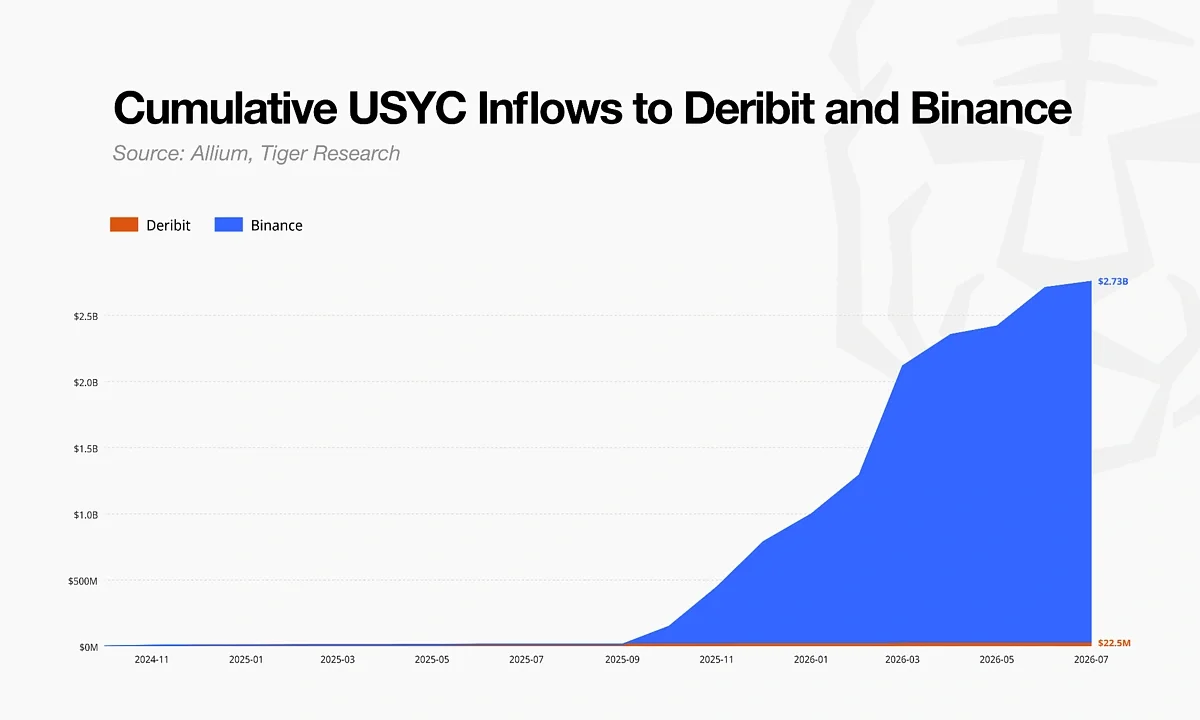
With an eye toward the future, Korea has the opportunity to play a pivotal role in the global financial marketplace. By embracing change and adapting to the rapidly evolving landscape, the nation can leverage its existing strengths to redefine its position in an increasingly borderless finance ecosystem.
Acknowledging a Rapidly Changing Financial Environment
Korea’s stock-linked perpetual futures have made a significant impact in a short period, amassing KRW 307 trillion in trading volume. This isn't indicative of a mature market just yet, but it does reflect a nascent market striving to attain its full potential. Both offshore trading dynamics and the shifting profile of market participants highlight an ongoing transformation.
As the landscape continues to evolve, it will be crucial for Korea's financial sector to actively participate and shape its role within these offshore markets rather than simply observing from the sidelines. The question remains: how will Korea's financial institutions adapt to harness this escalating trend effectively?



Discussion
Sign in to join the discussion.