Explore how order book depth varies among major cryptocurrency exchanges, impacting trade execution beyond just trading volume.
Data for liquidity depth was gathered from primary USDT pairs across various exchanges over a span from August 25 to September 7, 2026. The exchanges included in this analysis are Gate, Binance, OKX, Bybit, KuCoin, HTX, and Hyperliquid.
This article is sponsored by Gate. The depth metrics are subject to change and reflect only the observed period.
The Significance of Order Book Depth
When traders assess exchanges, they often gravitate toward one key figure: the 24-hour trading volume. This approach seems logical, suggesting that higher volume indicates a more active and potentially better-performing exchange. However, volume only reveals past trading activity; it doesn't provide insights into how orders will actually be filled in real-time. Two exchanges may boast similar volumes but can deliver vastly different trading experiences upon execution.
The figure that truly dictates the quality of your trade execution is order book depth. Depending on the cryptocurrency in question, the contrasts among exchanges can be significant.
Understanding Order Book Depth
Centralized exchanges rely on an order book, which is essentially a live ledger of open buy (bids) and sell (asks) orders arranged by price. When a market order is issued, it gets filled by matching against the best available orders listed on the opposite side.
Order book depth quantifies the total volume of existing orders within a certain price range around the current market price. To evaluate liquidity, two conventional thresholds are often used:
-
Top-of-Book (L1) Depth: This metric captures the best bid and best ask, providing the most immediate view of liquidity. It indicates the prices and sizes available at the very top of the order book and is critical for understanding how well even the smallest orders will execute. The data is averaged from regularly taken snapshots throughout the observation period.
-
1% Depth: This encompasses the cumulative bid size within 1% below the mid price and the cumulative ask size within 1% above it, averaged on both sides. This level is less frequently engaged in stable markets but becomes essential in volatile moments, particularly when large orders impact the book.
Comparing Spot Depth Across Exchanges
Using order book data sourced from Gate during the period from August 25 to September 7, 2026, we can evaluate seven exchanges across the top 30 most active spot pairs, focusing on both top-of-book (L1) and 1% depth. The primary asset pairs examined are BTC, ETH, XRP, SOL, and DOGE, all paired with USDT.
Overview of Exchange Performance
The following charts illustrate the depth share on the top 30 spot pairs at L1 and at the 1% threshold. Each chart reveals different insights.
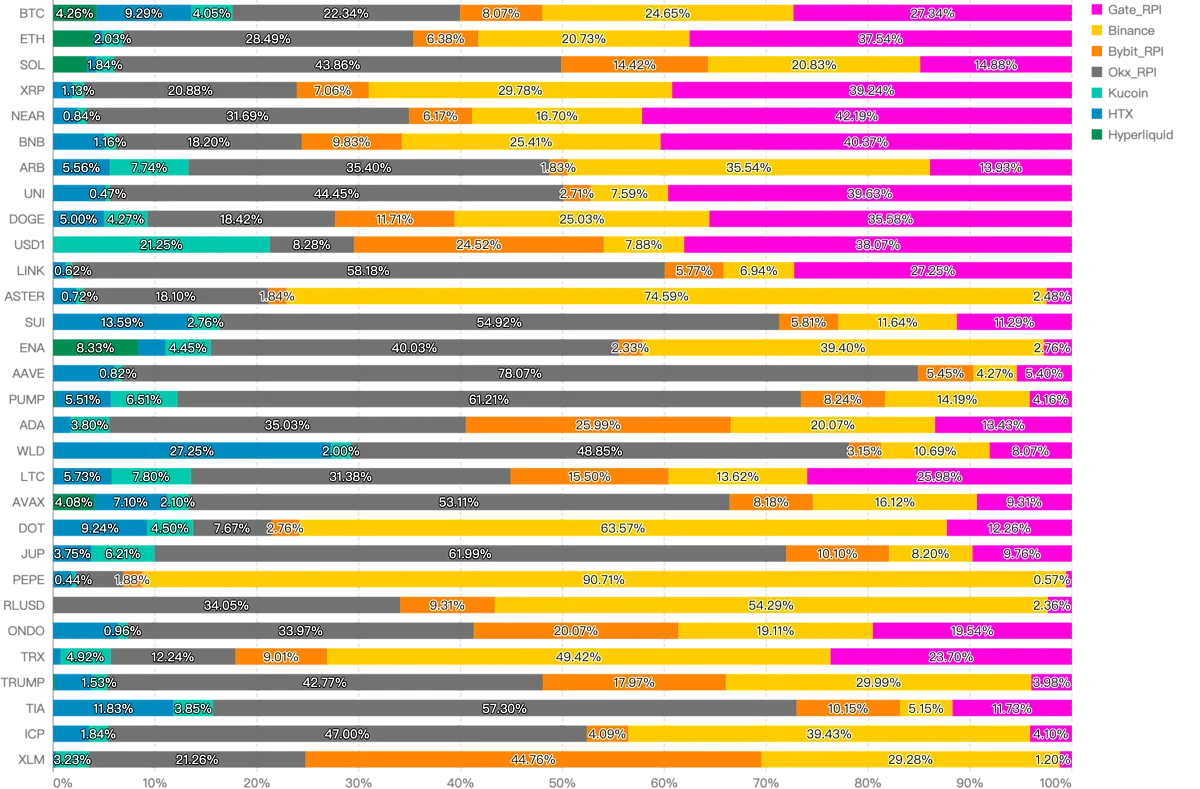
Figure 1 — Spot top 30 pairs, top-of-book (L1) depth share, single-day snapshot, 7 September 2026
In the L1 layer, OKX dominates with 16 of the 30 pairs, followed by Gate with 7, Binance with 6, and Bybit with 1. OKX excels particularly in mid-cap assets, while Gate’s victories include BTC (27.3%), ETH (37.5%), XRP (39.2%), BNB (40.4%), DOGE (35.6%), NEAR (42.19%), and USD1 (38.07%).
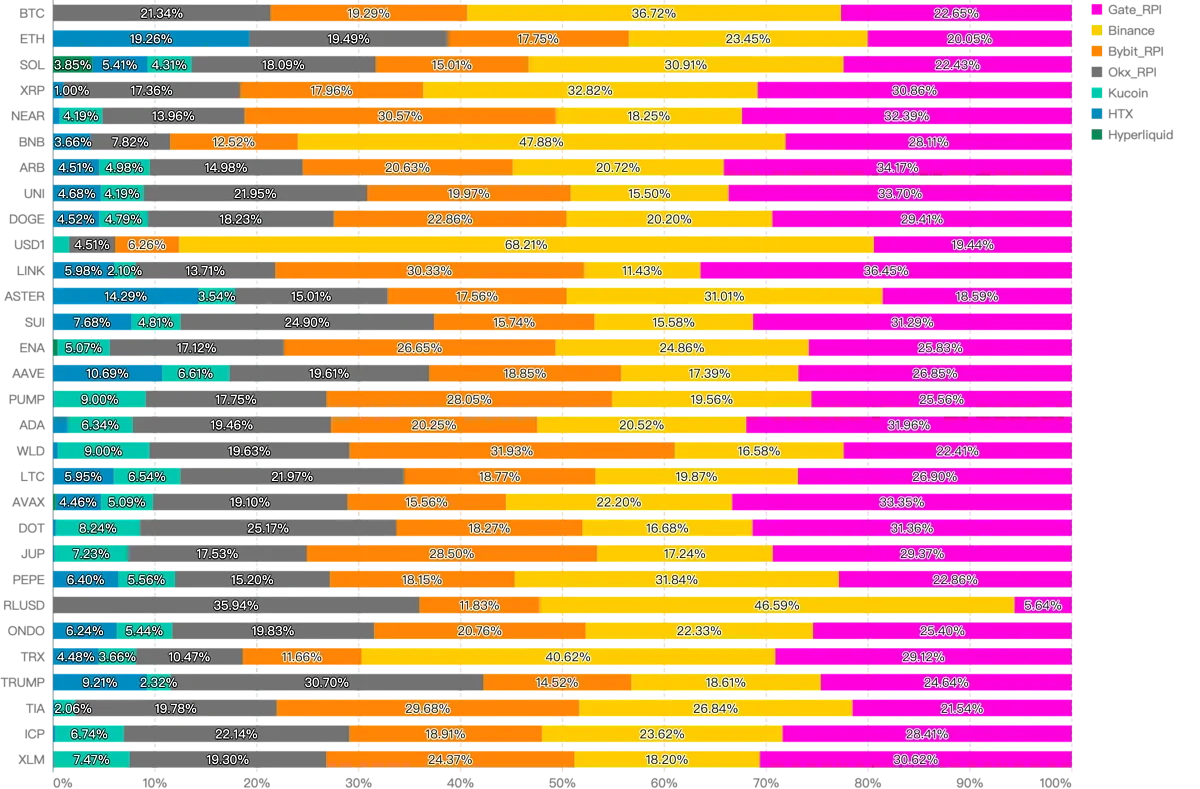
Figure 2 — Spot top 30 pairs, 1% depth share, single-day snapshot, 7 September 2026
At the 1% level, the rankings shift dramatically. Gate leads with 15 of the 30 pairs, Binance secures 10, Bybit captures 4, while OKX drops to just 1. More striking is Gate’s consistency—it ranks first or second on 28 of the 30 pairs, underscoring its widespread coverage, whereas Binance's success primarily focuses on the most substantial assets.
These patterns highlight distinct market-making strategies: OKX targets mid-cap liquidity, Binance emphasizes depth for dominant pairs, while Gate manages a dual strategy—offering competitive pricing on high-volume assets and deeper coverage across the remainder of the top tier. The right choice depends on the specifics of the order you're placing.
If you’re trading Bitcoin, the performance metrics tell a compelling story. At the tighter 1% depth band, Binance maintained the lead throughout all 14 days observed, with a median of $20.01M compared to Gate’s $12.74M (0.64x), and trailing exchanges like OKX and Bybit at $11.60M and $11.21M, respectively. Such disparities are crucial for traders managing large transactions.
However, this 1% depth figure often doesn’t resonate with typical retail trades. In the environment where most BTC transactions actually take place, Gate frequently topped the L1 depth over the observation period.
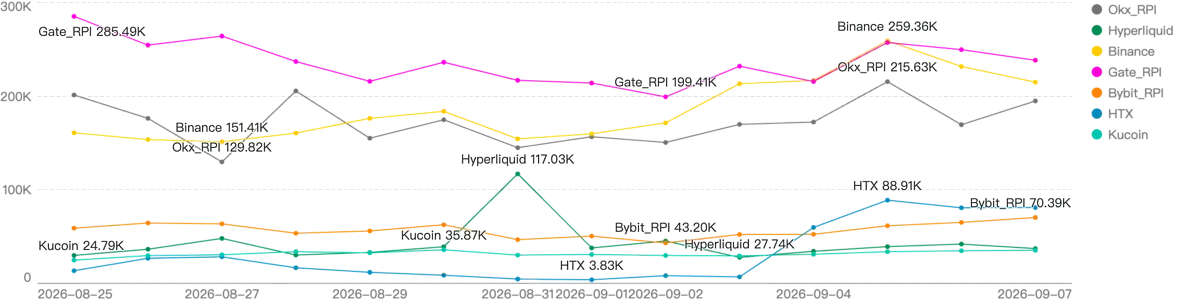
Figure 4 — Spot BTC, top-of-book (L1) depth in USD, 25 Aug – 7 Sep 2026
At L1, Gate excelled on 12 of the 14 days, averaging a depth of $236.8K compared to Binance's $174.0K and OKX's $171.2K. If you're trading smaller amounts of BTC, analyzing the order book depth is vital; Gate provided superior pricing for most days during this timeframe.
Spot Depth for Ethereum and Others
A similar trend is evident for Ethereum. At the 1% depth, Binance led with $8.07M for 11 of the 14 days, leaving Gate in third with $6.75M, only 0.84x of Binance. Other exchanges grouped closely within about 35% of each other, indicating healthy competition.
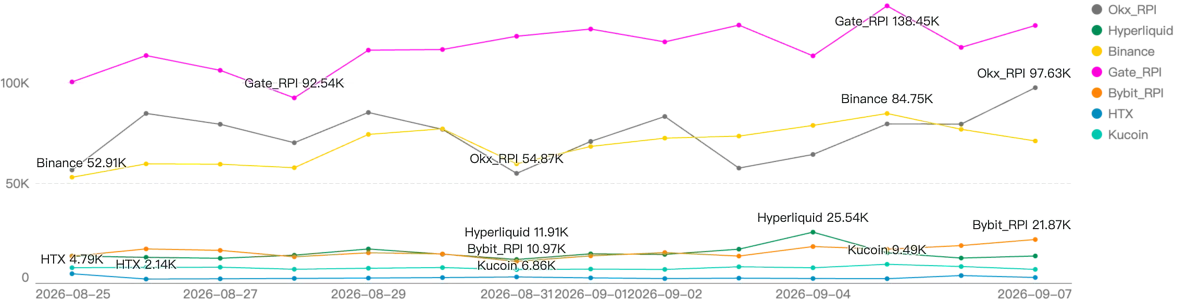
Figure 6 — Spot ETH, top-of-book (L1) depth in USD, 25 Aug – 7 Sep 2026
Conversely, at L1, Gate led all 14 days with a median depth of $117.2K, outperforming OKX at $78.1K and Binance at $71.7K by a substantial margin. The consistency across days solidifies Gate's position as the preferred exchange for ETH trading.
Performance of Other Major Cryptos
For XRP and DOGE, the trend mirrors that of BTC and ETH. At L1, Gate led both cryptocurrencies, topping XRP on 12 of the 14 days with a median of $19.3K—1.54x greater than Binance's $12.5K—and achieving a similar result for DOGE.
Diving deeper, differences emerge in the 1% depth analysis. On XRP, Binance narrowly edged out Gate, with $1.97M compared to $1.82M, while for DOGE, Gate maintained leadership with a median depth of $1.55M, demonstrating the venue's dominance in this area.
In the broader context of the top 30 spot pairs, Gate's advantage is most pronounced at the 1% depth tier in mid-cap areas like LINK, ARB, and UNI, showcasing both competitive pricing and extensive order book coverage.
Depth in Perpetual Markets
When it comes to USDT-margined perpetual contracts, order book depth takes on heightened significance. Leverage here amplifies slippage, and a shallow book can lead to poor liquidation prices and larger losses during market volatility. Perpetual contracts are executed far more frequently than spot trades, and thus the size of the orders at the best bid and ask is what most greatly influences fills. Thus, this analysis focuses exclusively on Top-of-Book (L1) Depth.
This evaluation includes not only crypto leads like BTC and ETH, but also tokenized options for gold (XAU), crude oil (CL), and SK Hynix. These markets have well-established references outside of crypto, illustrating different market-making requirements.
Summary of Perpetuals Market
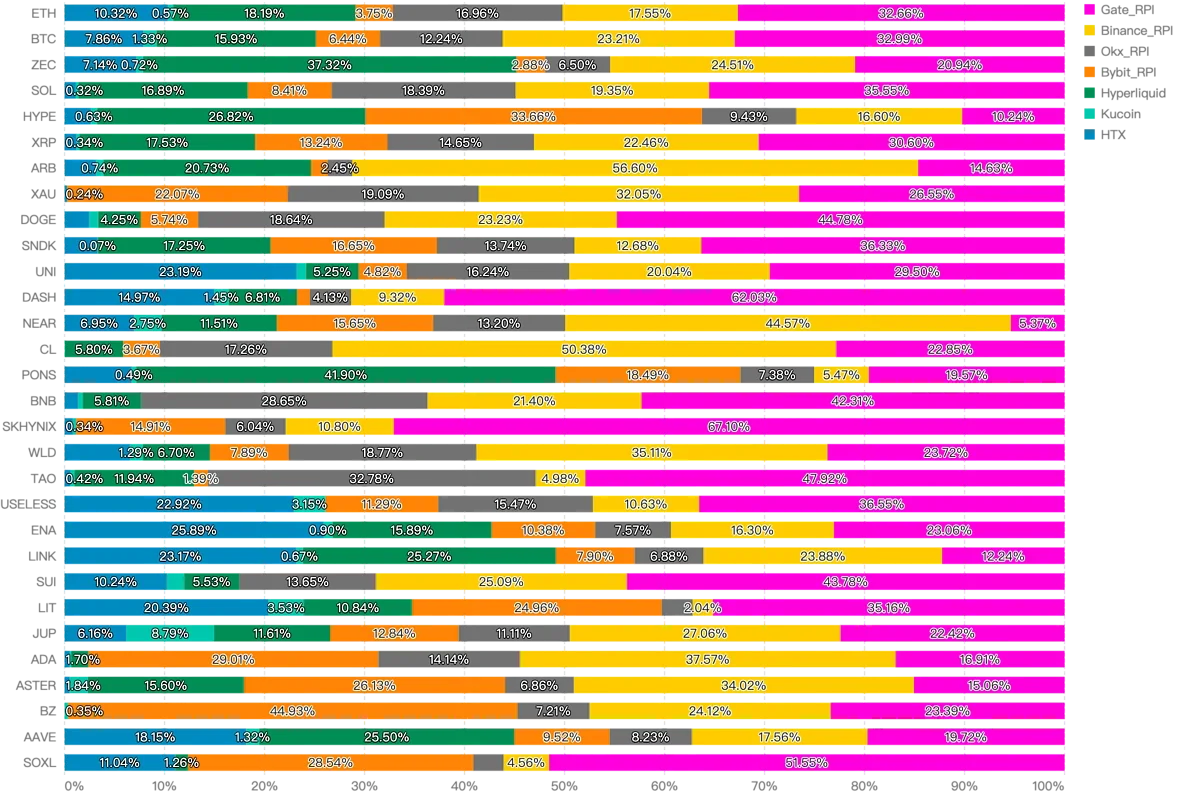
Figure 7 — Perpetuals top 30 pairs, top-of-book (L1) depth share, single-day snapshot, 7 September 2026
In the perpetuals market, Gate outpaces competitors on 15 of the 30 pairs, followed by Binance with 8, Hyperliquid with 4, and others trailing. Gate’s depth shows significant strength particularly in instrument areas of tokenized equities and leveraged ETFs.
Performance of Major Crypto Perpetuals
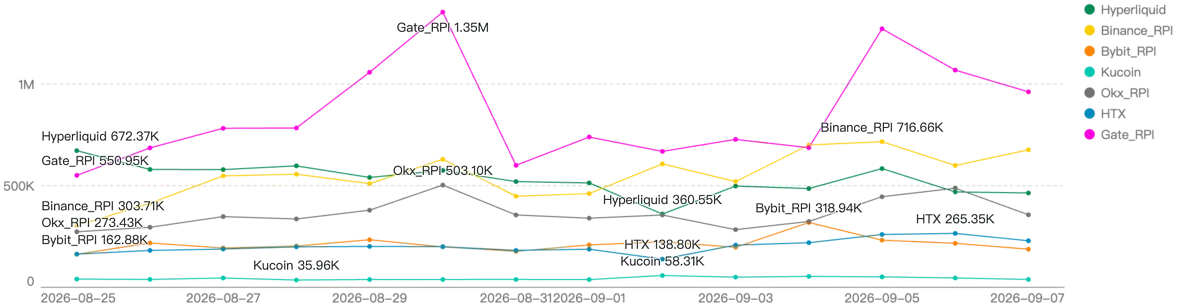
BTC contracts represent the most contested segment of the perpetuals market. Over the observation period, Gate dominated 12 of the 14 days with a median depth of $761.0K, significantly outperforming Binance and Hyperliquid.
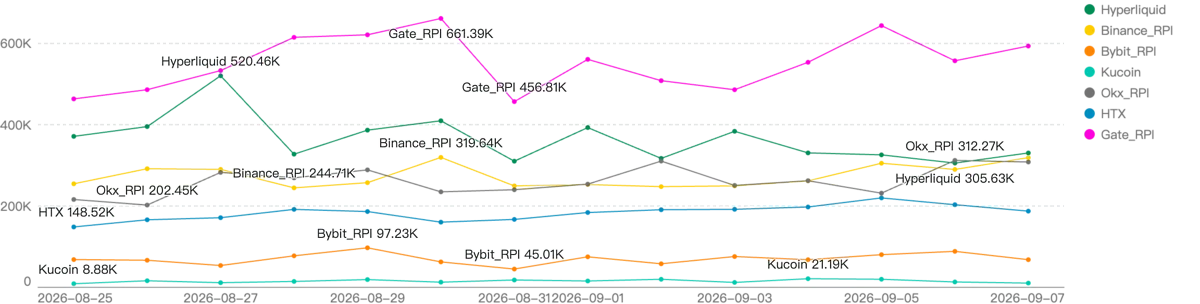
Figure 9 — ETH perpetuals, top-of-book (L1) depth in USD, 25 Aug – 7 Sep 2026
On the ETH front, Gate emerged as a consistent leader, outperforming with a median of $555.5K, successfully distancing itself from Binance and OKX.
SOL is the third major cryptocurrency in the perpetuals sector but exhibits different competitive dynamics.
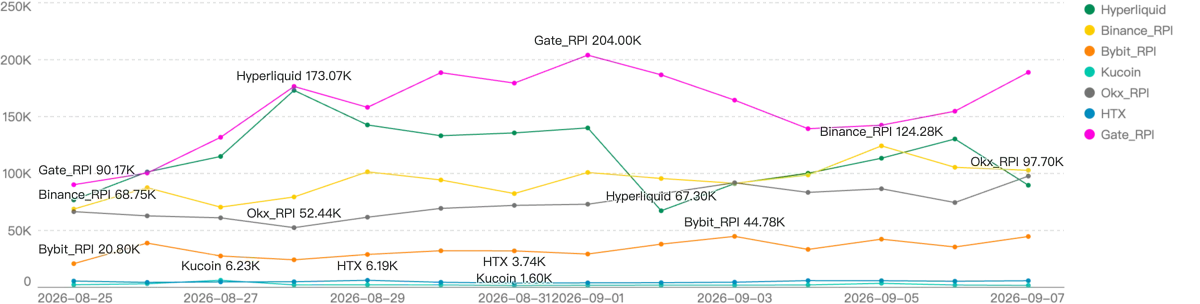
Figure 10 — SOL perpetuals, top-of-book (L1) depth in USD, 25 Aug – 7 Sep 2026
In SOL perpetuals, Gate maintained leadership for 13 of the 14 days, though displays of volatility from its peers, particularly Hyperliquid, underline a more competitive environment.
TradFi Perpetuals: XAU, CL, SK Hynix
Examining tokenized TradFi securities allows us to gauge both competitiveness and differentiation in this market space.
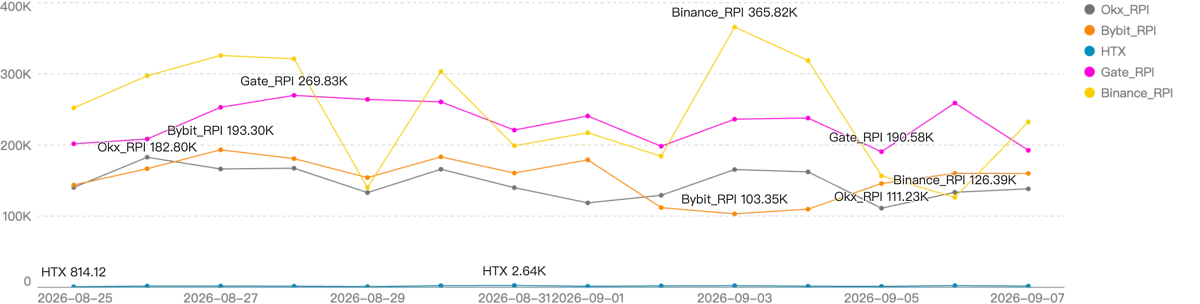
Figure 11 — XAU (gold) perpetuals, top-of-book (L1) depth in USD, 25 Aug – 7 Sep 2026
For gold, the competition is tight, with Gate and Binance trading closely at L1 depth — highlighting how competitive the crypto space is against established commodities.
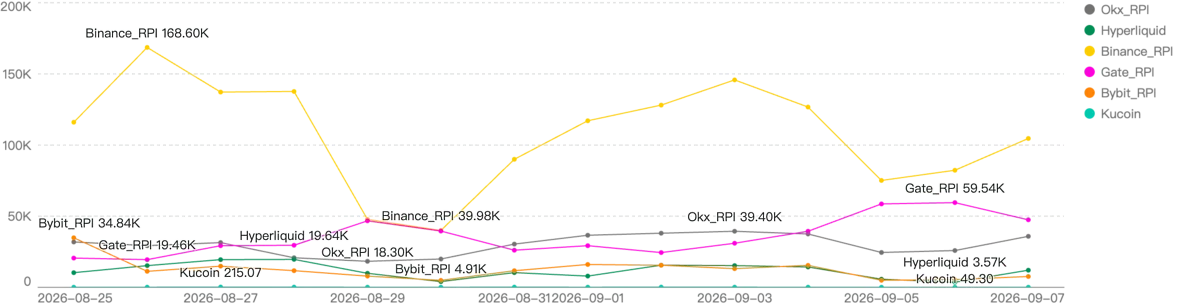
Figure 12 — CL (crude oil) perpetuals, top-of-book (L1) depth in USD, 25 Aug – 7 Sep 2026
In contrast, crude oil exhibits a distinct pattern as Binance leads across the observed period—highlighting the nuances of market flow and pricing strategies.
Performance of Tokenized Equities
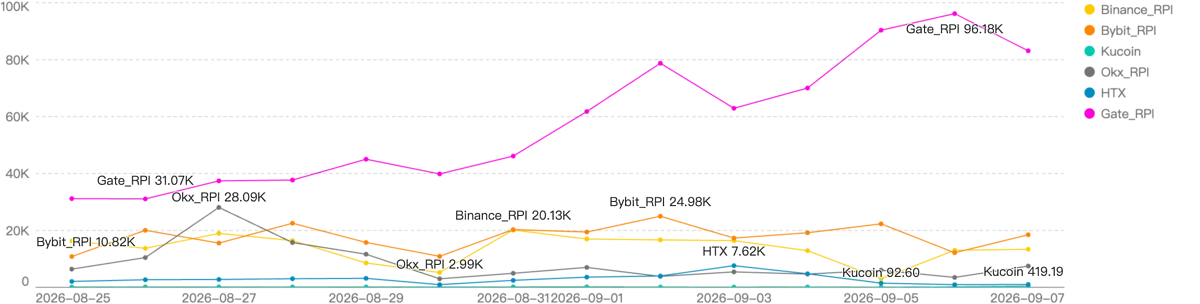
Figure 13 — SKHYNIX perpetuals, top-of-book (L1) depth in USD, 25 Aug – 7 Sep 2026
On the SK Hynix perpetual contracts, Gate performed impressively, significantly outpacing competitors, which illustrates the potential for newer market sectors in this space. Gate demonstrated an increasing quoted size throughout the observation period, indicating an expanding market presence.
Insights for Various Trader Types
Before drilling down into specific assets, bear in mind that which exchange demonstrates the deepest order book can vary widely—depending heavily on the asset being traded and the size of the order. It's critical to assess depth, not just volume, before executing any trade.
For small trades made during the day, the L1 depth is crucial. Gate generally provides the best prices across leading assets, except for SOL. However, for larger orders, the 1% level becomes more relevant. Here, especially in BTC and ETH, Binance edges out the competition.
Gate shines in perpetuals, consistently leading in all examined instruments, particularly in tokenized equities where its depth is remarkable.
If you're dealing with real-world assets or tokenized equities, the variance is stark. In markets with established reference prices, like gold and crude, Binance shows superiority. Yet, for larger orders, Gate often prevails, indicating the need to analyze both depth tiers for optimal execution.
One universal point across all trading strategies: depth is not static. Throughout the 14-day examination, we noted fluctuations exceeding 2x on numerous occasions across the exchanges.
Best Practices for Exchange Selection
Examine each instrument separately, rather than relying solely on venue rankings. It’s common for a single exchange to excel in one asset while struggling in another.
Align your assessment with order size. For smaller trades, focus on the market depth at the best quoted prices; for larger transactions, accumulate volume data within the 1% range for better execution clarity.
Take a close look at the data conventions when comparing liquidity numbers. Understanding what is included or excluded can completely change your interpretation of the depth available.
Monitor trends instead of singular data points. Short-lived spikes are frequent in both spot and perpetual markets; consistent performance over several days is more telling than an isolated peak.
Most major exchanges provide real-time order book data alongside pricing charts. Spending a few moments reviewing these directly can save considerable issues later on when dealing with unexpected slippage.
Final Thoughts
Volume figures can offer a starting point, but they won't adequately inform your experience once you've placed an order. Order book depth provides the necessary details on execution quality, and can be systematically tracked over time.
One clear takeaway from this analysis is that there is no single leading venue. Different exchanges excel in specific areas based on their structural focuses. Binance tends to maintain deeper books for significant spot pairs, while OKX focuses on mid-cap assets. Gate, however, showcases a broader depth and appears particularly strong for trading various tokenized equities and crypto perpetuals.
The nuances of market-making capital allocation play a vital role in these rankings. Ultimately, as trading becomes more mature, the emphasis on execution quality through metrics like order book depth will become crucial in guiding where traders choose to engage.
Data note: The order book depth data presented in this analysis was collected via Gate's depth monitoring system, encompassing the timeframe from August 25 to September 7, 2026.
This material is intended for informational use only and should not be considered financial or investment advice.


Discussion
Sign in to join the discussion.