StonkBrokers is blurring the lines between collectibles and securities, allowing NFT owners to earn Stock Tokens on Robinhood's innovative Ethereum layer.
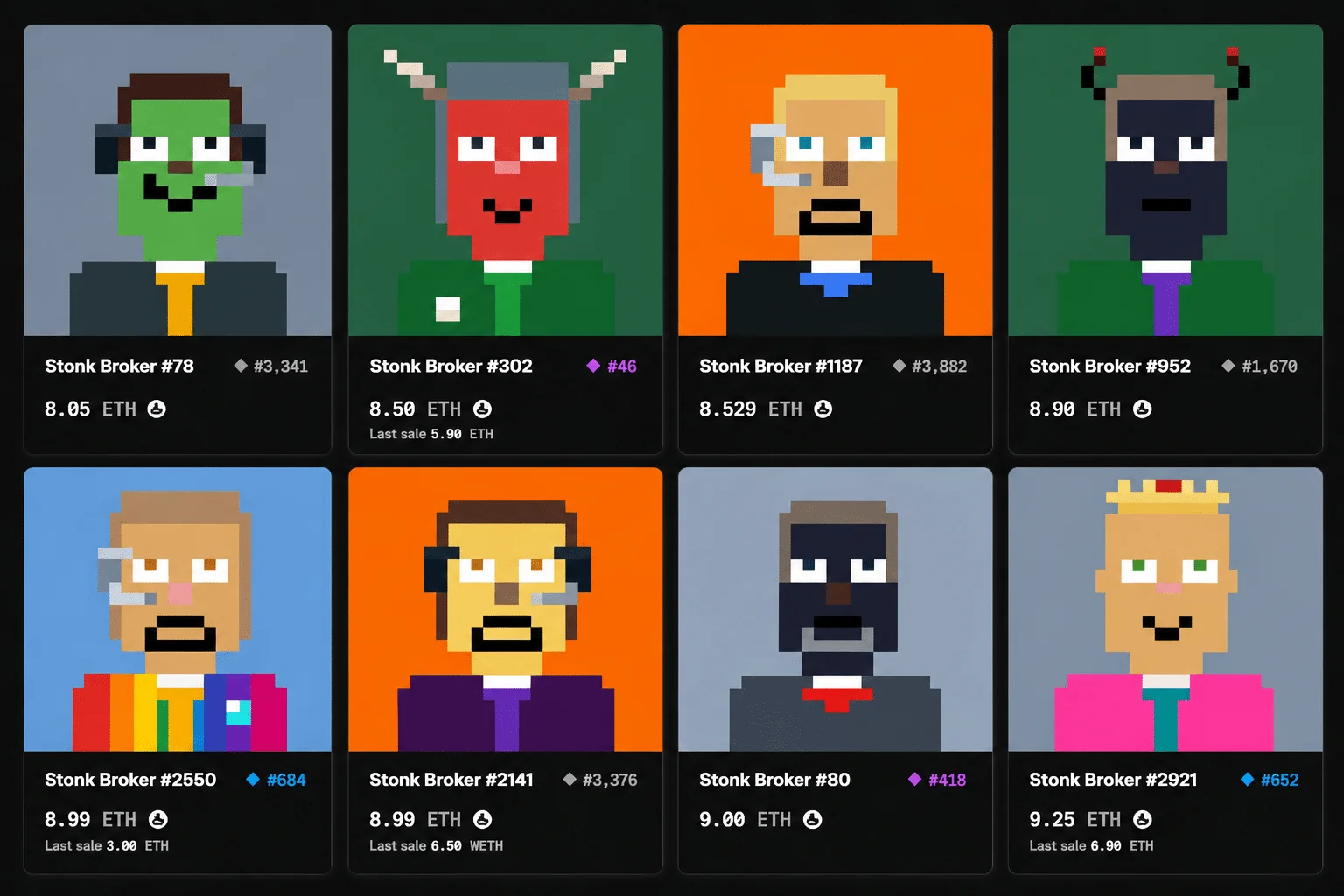
On Robinhood Chain, StonkBrokers is generating buzz with its colorful 4,444-piece NFT collection, which boasts a remarkable 77% increase in floor price within the last month. Unlike traditional NFTs, these tokens come with the promise of rewards in the form of Stock Tokens tied to major companies like Tesla and Amazon. This unique combination raises important questions about the classification of such assets—whether they are collectibles or securities.
Clutch Markets, the entity behind StonkBrokers, has made these tokens available to investors across more than 120 countries, though, intriguingly, this doesn’t include the U.S., U.K., Canada, or Switzerland. The U.S. regulatory environment surrounding tokenized securities remains complex, as recent guidance from the SEC, which included a proposed exemption, was removed from consideration as of August. This uncertainty echoes previous challenges faced by NFT projects, such as Stoner Cats 2, which encountered scrutiny over similar issues.
The Mechanics of StonkBrokers
For StonkBrokers owners to earn Stock Tokens, they must navigate certain geographic and network restrictions. Holders are also required to complete a "Program attestation," affirming their status in a "permitted jurisdiction." It's notable that while these NFTs are constrained by such regulatory measures, they can be traded in secondary markets without undergoing Know Your Customer (KYC) processes that traditional Robinhood customers encounter. The complexity here reveals how StonkBrokers is positioning itself at the intersection of collectibles and securities, a frontier where legal precedent remains sparse.
Ariel Givner, founder of Givner Law, emphasizes the novelty of this approach, highlighting that it occupies a legal gray area without clear regulatory guidance. “Nobody’s done it before,” she stated, indicating the risks involved given the lack of established precedent for such mixed-use digital assets.
Market Performance and Unique Features
Since its launch earlier this year, StonkBrokers has shown remarkable market performance by briefly surpassing the floor price of the highly covetable Bored Ape Yacht Club NFTs. After fluctuating prices, the StonkBrokers collection has stabilized at around 8.50 ETH (approximately $20,500), edging out the Bored Apes at 7.65 ETH. Here’s the catch: the collection doesn't follow typical auction mechanics; instead, it employs an automated market maker that sets prices based on a flat fee, linking its value to the performance of the token associated with the NFTs.
This NFT collection offers flexibility by using the ERC-6551 standard, which allows each token to maintain its own smart contract wallet. According to their documentation, each StonkBrokers NFT is initially “seeded” with tokenized stock, enabling the accumulation of Stock Tokens through a rewards program once activated. This model allows for trading NFTs without losing the underlying stock value tied to them—an intriguing feature given the complexities of the current regulatory landscape.
Regulatory Considerations and Implications
The potential for regulatory scrutiny looms large, especially given the SEC’s recent interpretation focusing on digital collectibles not qualifying as securities per se, though any sales could still fall under investment contracts. The StonkBrokers are intricately tied to financial instruments, and legal professionals like Ryón Nixon from Horizons Law note how their design cleverly avoids triggering compliance requirements linked to jurisdictions like the U.S. Even if Stock Tokens end up in U.S. wallets, Robinhood’s structure prevents direct purchases or redemptions, shielding the project somewhat from immediate regulatory challenges.
The risk remains that regulatory bodies could take a closer look at how funds are structured and allocated within these NFT projects. StonkBrokers attempts to avoid confusion over profit generation by stipulating manual engagement for rewards and strictly prohibiting terms associated with passive income, declaring that payouts are “for services rendered.” However, the enforceability of these conditions remains untested, and past precedents point toward potential complications.
A Cautious Path Amid Innovation
While the project forges ahead, launching additional features such as Stonk Exchange, which provides a venue for trading stock tokens, their strategy sits precariously between innovation and potential regulatory backlash. The innovations in tokenization announced this year, particularly in the wake of the SEC’s transformative discussions regarding transfer-agent rules, highlight a growing appetite within the blockchain community for experimentation with asset class definitions.
Despite the associated risks, observers like Nixon view the approach taken by StonkBrokers as creating new opportunities in a challenging market. “It’s a very interesting approach that opens the market up to new design spaces,” he remarks.
In the grand scheme, StonkBrokers not only redefines the boundaries of NFT utility but also signals a potential path for future projects to tread lightly within the complexities of law and finance while embracing the ethos of digital assets.
For further insights on this topic, check out the conversation on how tokenized stocks could reshape traditional brokerage models.


Discussion
Sign in to join the discussion.