Hong Kong is emerging as a key player in the tokenization of real world assets, connecting international investors with diverse asset classes.
Shifting Dynamics in the RWA Market
The tokenization of real world assets (RWA) is witnessing a remarkable transformation, having surged from approximately $1.5 billion in August 2023 to nearly $38.86 billion by September 2026, according to RWA.xyz. This 26-fold growth highlights a profound shift in how assets are conceptualized, especially as governments shape their regulatory environments for tokenized securities.
The pressing question is no longer if the market is growing, but how to effectively bring these assets to market for investors who seek both purchase and repayment.
Hong Kong's Distinct Advantages
The territory is positioning itself as a strategic hub for RWA tokenization, largely due to its established regulatory framework, access to a global investor base, and experience in the issuance of tokenized bonds, including those from governmental sources. The structured licensing and investor protection measures in place provide a clear roadmap that bolsters confidence among issuers and institutional investors.
Compared to other jurisdictions, the clarity provided by Hong Kong's regulatory landscape not only aids firms in planning token issuance but also reassures investors regarding their rights and protections. This is pivotal as the market continues to expand.
The Mechanics of Asset Tokenization
To illustrate how assets from jurisdictions like Korea can effectively be tokenized for overseas investors, let’s examine the structured approach that combines entities in both Korea and Hong Kong.
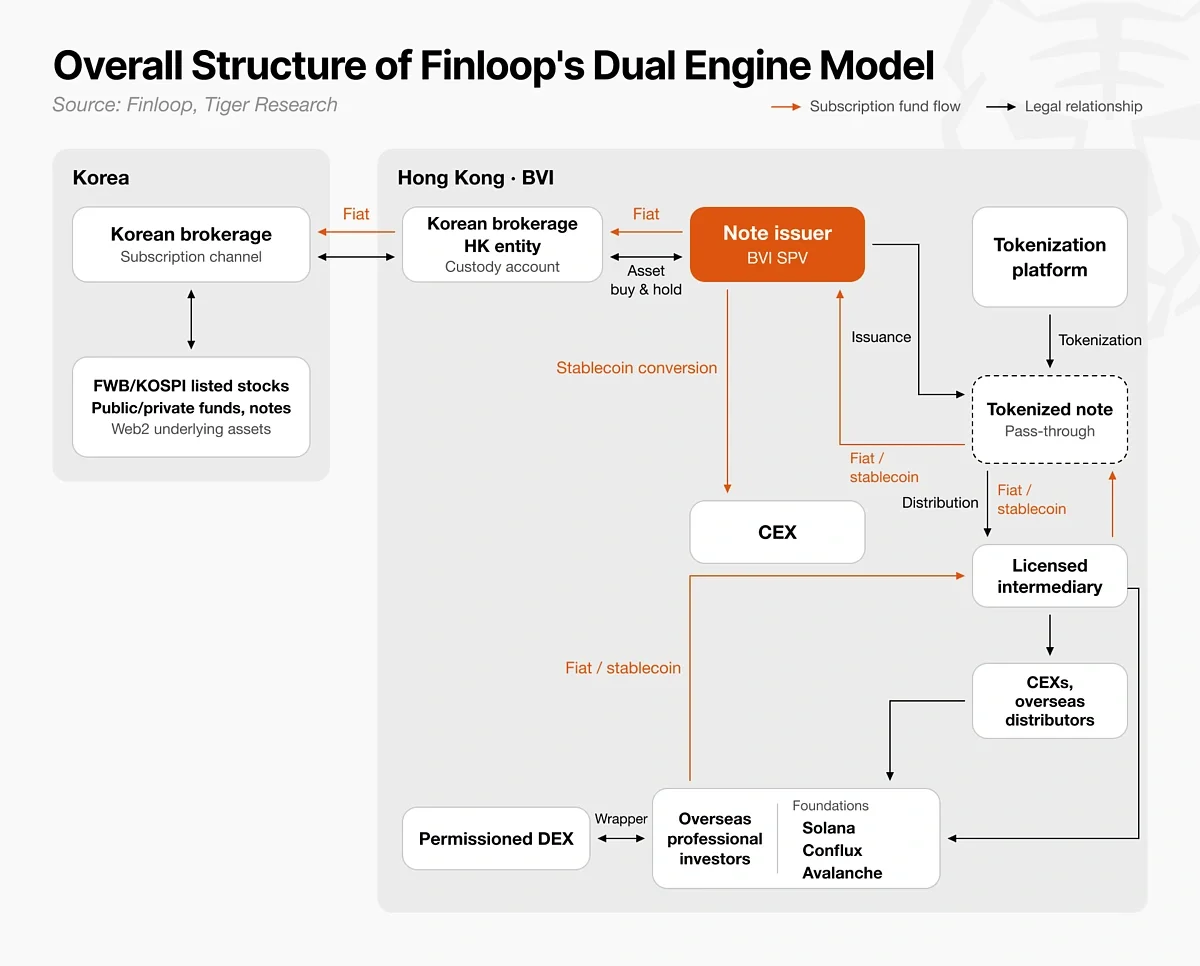
At the operational core is a special purpose vehicle (SPV) established in the British Virgin Islands (BVI), designed to facilitate liquidity and investor engagement.
The Role of Key Participants
- Korean Securities Firm: This entity serves as a conduit for sourcing underlying assets like equities and mutual funds, essentially working through a brokerage account based in Hong Kong.
- BVI SPV: It acquires and holds these assets, subsequently issuing backed notes.
- Tokenization Platform: This creates and maintains a digital record of tokens representing the issued notes.
- Licensed Intermediaries: These firms distribute the SPV's products to professional investors abroad.
Subscription payments flow from overseas investors through these intermediaries. Whether using fiat or stablecoins, these funds pass to the SPV, which converts stablecoins into fiat via centralized exchanges (CEXs) before procuring the underlying assets.
Ensuring Successful Cash Flow
Identifying the Right Underlying Assets
The SPV must assert legal rights to the cash flows generated by its underlying assets. Depending on the asset type, be it government bonds or more intricate revenue streams like royalties, different legal frameworks must be in place to ensure the SPV can collect these payments effectively.
contractual clarity is vital — outlined terms must define collection processes and obligations to ensure cash flows reach the SPV on time, securing the capital necessary for investor repayments.
Token Issuance and Operational Challenges
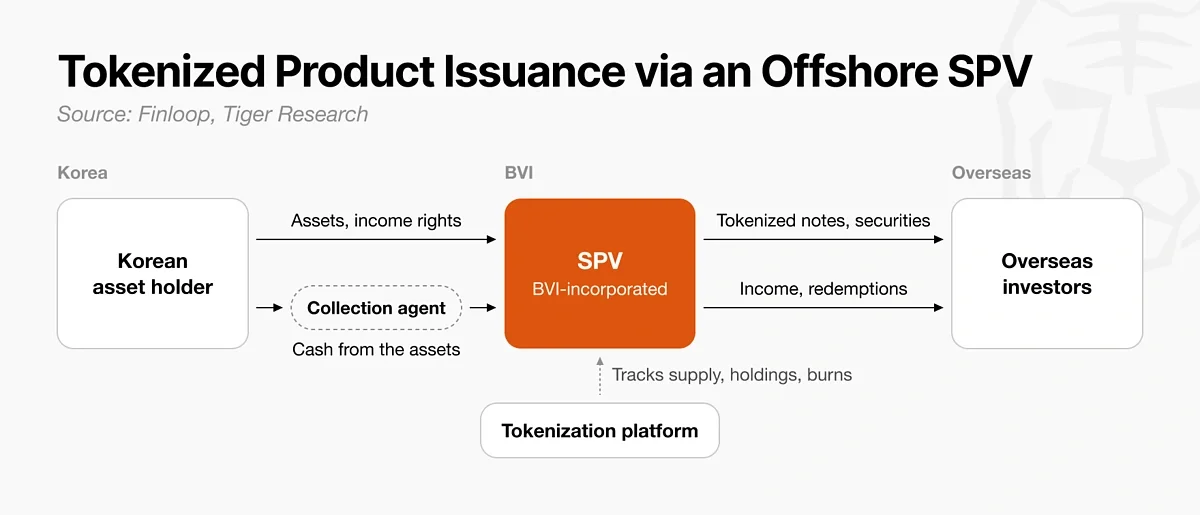
Token issuance is powered by the SPV, which converts asset rights into tradable tokens. Investors, therefore, acquire financial products issued by the SPV rather than purchasing the underlying assets directly. The integrity of this structure hinges on timely cash flows from the assets to meet the repayment obligations towards investors.
If cash generated from underlying assets arrives late or in insufficient amounts, liquidity crises could disrupt promised payments. The SPV must ensure its incoming cash flow aligns with scheduled repayments, necessitating stringent timelines and collection practices.
Navigating Distribution Beyond Hong Kong
While establishing a product through an SPV is the initial step, the real challenge lies in effectively distributing to overseas investors. Utilizing licensed intermediaries in Hong Kong gives an added layer of regulatory conformity and accessibility to international markets.
However, a sale in Hong Kong does not automatically authorize further sales elsewhere. Each jurisdiction requires independent assessment and adherence to regional regulations, including transfer limitations to eligible investors only. Therefore, successful product structuring will also involve negotiations with international trading platforms to facilitate wider product distribution.
Understanding the Risks
The promise of a successful issuance does not guarantee payment fulfillment. Several risks could impede the cash flow from underlying assets to investors:
- Ambiguities in Legal Arrangements: Clarity regarding collection rights and processes is essential, particularly for assets like export receivables.
- Timing Gaps in Cash Flow: If asset settlement precedes investor payments, liquidity issues could arise, complicating repayments.
- Cross-Border Compliance Issues: Mechanisms for transferring funds from asset holders to the SPV must be executable and compatible with tax frameworks.
The overarching concern remains: can cash from Korean assets reach overseas investors punctually and in full compliance with contractual obligations?
Scaling Beyond Initial Success
Completing a single issuance is merely a foundational step; the sustainability of this structure hinges on its scalability for future products. If each subsequent offering requires a repeat of all preliminary analyses and contractual frameworks, growth may be stunted.
As participants become accustomed to the process, the goal will be to streamline asset evaluations and execution for new products, focusing on whether investors return for future offerings and if asset holders continue supplying suitable collateral.
Such adaptability and resilience in the model are critical factors that could foster a lasting market for tokenized assets.



Discussion
Sign in to join the discussion.